Catch And Shoot
- 4.5
- Rating
- 10.00M
- Installs
- Free
- Price

 Analysis by App-foxy
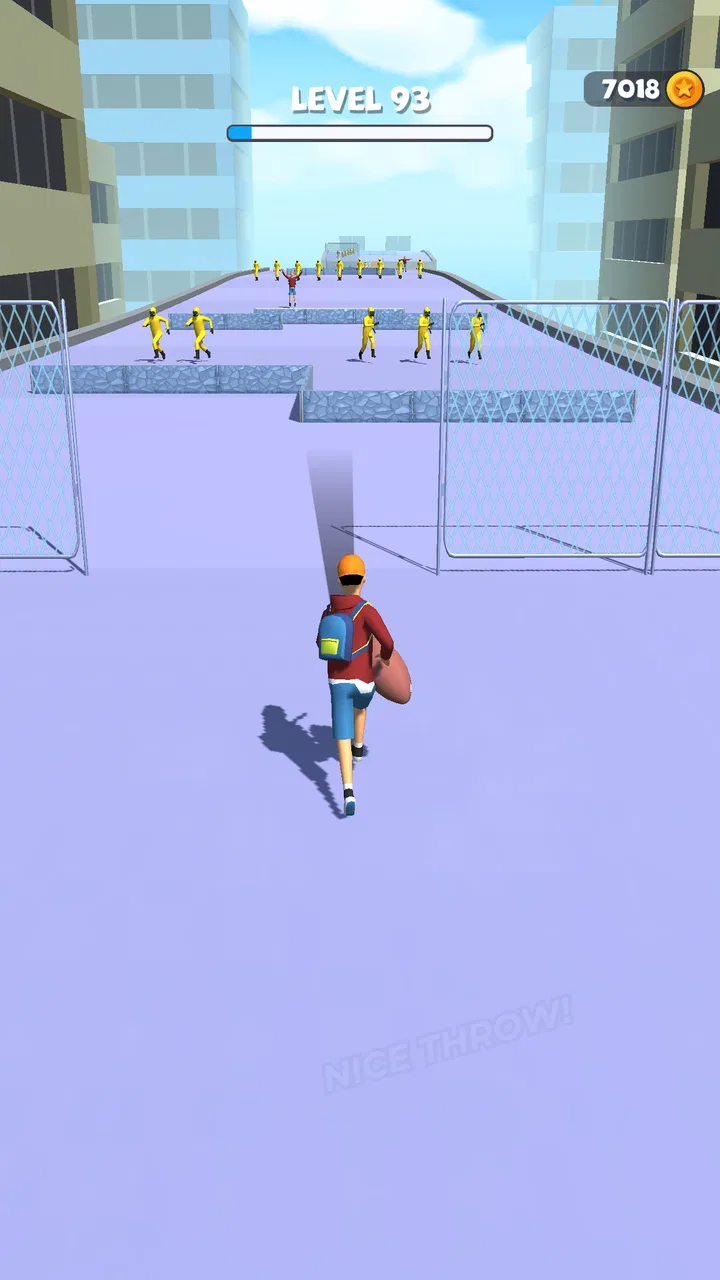
Catch And Shoot is the kind of sports game I open when I want a quick challenge rather than a full match with rules, teams, and long sessions. The idea is immediately understandable: catch a pass, aim the throw, and keep the action moving. That simplicity is its biggest attraction, but it also means the game depends heavily on how much you enjoy repeating a small skill until your timing improves.
After spending time with it, I see it as a casual throwing game from VOODOO that works best in short bursts. It is free to download, aimed at players aged Everyone 10+, and its straightforward presentation makes it easy for a first-time player to understand without studying instructions. The store summary describes a catch-and-throw experience, and that is exactly the central rhythm: receive the ball, make a quick decision, and try to complete the next action cleanly.
What makes the game appealing is how quickly it gets to the point. There is no need to learn a large control scheme or remember a complicated set of objectives before trying your first attempt. At the same time, I would not recommend it to someone looking for a deep sports simulation. This is closer to an arcade reflex game than a realistic recreation of a complete sport, and that distinction matters before you install it.
You May Also Like

 Google Keep - Notes and lists
Google Keep’s Quiet Growth Shows the Appeal of Simpler Notes
As mobile work gets busier, Google Keep keeps winning a simple contest: capture a thought quickly, find it later, and get on with the day.

 Blood Strike: 2.5 Anniversary
Blood Strike’s Loadouts Turn Every Drop Into a Tactical Gamble
A close look at Blood Strike’s custom loadouts: how fast access to signature weapons reshapes its battle royale rhythm, rewards preparation, and narrows the gap between fights.

 Pandora - Music & Podcasts
Pandora’s Music Is Easy to Start, but Harder to Recover
Pandora’s strength is its low-effort path from a seed to a station. Its weak spot is how much confidence it asks you to place in connection, setup, and quiet recovery.

 8 Ball Pool
 Is Built on Rivalries, Rematches, and Routine
A close look at the rivalries, rematches, shared routines, and unanswered safety questions that turn a quick pool match into a persistent mobile community.

 Samsung Music
’s Quiet Strength Is Playing What You Already Own
Its reach comes less from spectacle than from dependable access to a personal library. That simplicity is both the app’s strongest retention engine and its ceiling.

 AccuWeather: Weather Radar
AccuWeather Review: A Quick, Clear Forecast for Everyday Decisions
For everyday plans, the best forecast is the one you can understand quickly. AccuWeather makes rain timing, radar, and local conditions easy to act on, with a few trade-offs.
More From Our News Desk



Getting comfortable with the catch-and-throw rhythm
On first launch, I would approach Catch And Shoot with the expectation of a compact, touch-focused experience. The name tells you where your attention belongs: catching successfully is only half the job, while the throw determines whether the sequence continues. That creates a useful tension because a player can understand the objective instantly but still need practice to perform it consistently.
The first few moments are best treated as a lesson in timing rather than a test of sporting knowledge. I found it more helpful to watch the movement of the play and react deliberately than to tap as quickly as possible. New players often assume that speed is everything in an arcade game, but a rushed touch can be less useful than a calm one. I recommend making your first attempts slowly enough to notice when the game expects you to catch and when it expects you to release or direct the throw.
The controls are designed around the phone screen, so your experience will depend partly on how comfortably you can see the action and respond with one hand. I prefer holding the device securely and keeping my other hand free, especially during the first attempts. That removes the distraction of shifting the phone while trying to judge a moving pass.
One practical tip is to keep your attention on the next action instead of celebrating a successful catch too early. Catching the ball may feel like the main achievement, but the following throw is where the sequence can break. Thinking of the two actions as one movement makes the game feel more natural and reduces the hesitation that often causes mistakes.
Another useful habit is to identify whether an unsuccessful attempt came from poor timing, an inaccurate direction, or simply reacting before the play was ready. Those errors can feel identical at first, yet separating them helps you improve faster. If I miss because I acted too early, I wait longer on the next attempt. If the catch works but the throw fails, I focus on the direction and timing of that second input instead of changing everything at once.
That small diagnostic approach is one of the more valuable things a generic store description will not tell you. Catch And Shoot becomes less frustrating when you treat each failed sequence as information. The game is simple enough that small changes in timing can make a noticeable difference, but it is also repetitive enough that random tapping quickly becomes tiring.
From installation to the first meaningful success
For a first-time user, I would define a meaningful success as completing a clean catch-and-throw sequence without rushing. Do not begin by chasing a long session or trying to prove that you can react instantly. Instead, focus on making one controlled action, then another. Once that feels predictable, the game’s basic appeal becomes much clearer.
My recommended first-session routine is simple. Start with the sound and visual action in front of you, keep your grip steady, and use the earliest attempts to learn the pace. When you catch the ball, avoid immediately tapping again out of excitement. Give yourself a brief moment to read the next movement, then make the throw with intention. This is especially helpful for players who are used to tap-heavy games where constant input is rewarded.
If your first attempt goes badly, that does not mean the game is difficult in a complicated way. It usually means the timing has not become familiar yet. I would give it several focused attempts before deciding whether the control style suits you. The important distinction is between a learning curve that feels satisfying and repetition that feels empty. Catch And Shoot can provide the former for players who enjoy polishing a small reflex skill, but not everyone will want to repeat the same basic interaction for long.
A realistic everyday use case is a short break between tasks. If I have only a few minutes, the game is easier to pick up than a sports title that expects a complete match. I can concentrate on one sequence, put the phone down, and return later without needing to remember a complicated story or team setup. That makes it a better fit for waiting rooms, commutes as a passenger, or a quick mental reset than for a planned evening of competitive play.
It is also suitable for sharing a quick challenge with someone nearby, provided both players enjoy reflex-based repetition. The appeal comes from seeing whether a person can improve their timing, not from managing a roster or learning elaborate tactics. If your friends prefer strategy, realistic physics, or multiplayer structure, a different sports game will probably create a more satisfying group experience.
Where beginners commonly get confused
The biggest source of confusion is assuming that catching automatically leads to a successful play. It does not. The game’s rhythm asks you to connect the reception and the throw, so a player who concentrates only on the incoming ball may lose the advantage immediately afterward. I found it useful to think ahead by one action: while preparing to catch, I was already watching for the next opportunity to throw.
Another common mistake is treating every miss as a problem with the same solution. Tapping earlier is not always the answer. Sometimes the issue is that the player has not watched the movement long enough; sometimes the throw is made without enough attention to where it should go. Changing one part of your response at a time makes practice more productive than simply increasing speed.
Players may also expect the game to behave like a full sports simulation because it is placed in the sports category. That expectation can lead to disappointment. Catch And Shoot is built around a narrow arcade interaction, so it does not replace a game with team management, match tactics, detailed player control, or a broader season structure. I would choose it for immediacy, not realism.
There is also a difference between being free and being completely free of interruptions or optional spending. Catch And Shoot is free to play, while in-app purchases are listed at $3.49 per item. I recommend deciding before playing whether you are comfortable ignoring optional purchases. For a short casual game, spending is not necessary for every type of player, but anyone who dislikes seeing purchase options in a free title should keep that part of the model in mind.
The age guidance is Everyone 10+, which gives parents a useful starting point when deciding whether the experience fits a younger player. I would still judge it by the child’s tolerance for repetition and quick reactions rather than by the age label alone. A child who enjoys practicing timing may find it engaging, while one who expects constant variety may lose interest quickly.
How it compares with other sports games
Compared with a conventional sports simulation, Catch And Shoot is much easier to understand and much faster to enter. A simulation may offer more control and depth, but it can also require time to learn formations, movement, rules, or several different buttons. Here, the focus stays on the immediate physical idea of catching and throwing, which is useful when I want a game that explains itself through play.
Compared with endless runners, the challenge feels more deliberate. Both styles can work in short sessions, but a runner usually emphasizes continuous movement and obstacle avoidance. Catch And Shoot asks me to pay attention to a particular interaction and improve the timing around it. That makes it a better choice for someone who enjoys precision rather than simply surviving as long as possible.
It is also different from sports puzzle games. Puzzle titles often reward planning several moves ahead, while this one is more about immediate response and coordination. If you like analyzing a board or setting up a chain, you may find the action too narrow. If you enjoy the satisfaction of getting a small physical gesture right, the simplicity can be refreshing.
The trade-off is variety. A focused mechanic can feel polished and approachable, but it may not hold your attention for weeks in the same way a larger sports game can. I would keep Catch And Shoot as a quick-play option rather than expecting it to become my only sports game. That role suits it better and makes its limitations easier to accept.
Performance, compatibility, and long-term appeal
The current version is 1.20, and the game supports devices running Android 8.0 or later. That makes checking your phone’s operating system a sensible step before installation, especially if you use an older device. On a compatible phone, the important practical question is not whether the game has a large feature set, but whether the screen feels responsive enough for the timing-based action.
Because the experience depends on quick reactions, a player may notice device handling more than with a turn-based game. A secure grip, a clean screen, and a comfortable viewing angle can make the first session feel more controlled. I would avoid judging the game after playing while distracted or while holding the phone awkwardly; those conditions can make a simple touch mechanic feel worse than it really is.
The game has reached over ten million installs, with an average rating of 4.5 from around fifteen thousand ratings and roughly one thousand two hundred written reviews. Those figures suggest that its quick, accessible format has found a sizeable audience, but they should not replace personal judgment. A popular arcade concept can still be a poor match for someone who needs deep progression or substantial content variety.
For long-term use, I would set a personal goal rather than simply opening the game without a purpose. That goal might be completing a cleaner sequence, improving consistency, or seeing how long you can maintain concentration. This approach gives the repetition a reason. Without one, the same catch-and-throw loop may start to feel mechanical sooner than expected.
One advanced but practical strategy is to separate warm-up from performance. Use the first few attempts to reacquaint yourself with the timing, then judge your session only after your hands and attention have settled. This prevents one poor opening from making you quit too quickly. It also helps reveal whether you genuinely enjoy the mechanic once the initial unfamiliarity has passed.
Who should try it, and who should skip it
I would recommend Catch And Shoot to players who want a free sports-themed game that can be understood almost immediately. It is particularly suitable for people who enjoy reflex challenges, short sessions, and improving through repetition. It can also work for a first-time mobile gamer who does not want to learn a complicated control layout before seeing whether a game is enjoyable.
I would be more cautious about recommending it to players looking for a complete sporting experience. If you want realistic matches, detailed team decisions, a large career mode, or a strong sense of progression, this is probably not the right choice. A broader sports title will give you more variety, even if it takes longer to learn and demands more storage, time, or attention.
I would also skip it if repeated attempts at one central mechanic quickly frustrate you. The game’s strength comes from narrowing the focus, and that same focus is its main limitation. It does not disguise the fact that you are practicing a compact sequence again and again. Whether that feels satisfying or monotonous depends almost entirely on your taste.
My final take after learning the basics
After getting used to the catch-then-throw rhythm, I found Catch And Shoot easy to recommend in the right situation. It is not trying to be a full sports simulation, and it should not be judged as one. Its value is the quick path from opening the game to attempting a recognizable action, followed by the small satisfaction of making that action cleaner with practice.
VOODOO keeps the concept accessible, and the free entry point makes it simple to test without committing to a large game. The listed purchase price of $3.49 per item is worth remembering, but the more important decision is whether the core loop holds your attention. If it does, the game can fill short breaks surprisingly well. If it does not, extra attempts will not transform it into a deeper sports experience.
My advice is to install it with a modest expectation: give yourself a few focused attempts, learn the timing, and decide whether the repetition feels rewarding. The best reason to play Catch And Shoot is not its size, but its immediate, hands-on challenge. For quick reflex practice and casual sports action, it earns a place on my phone. For players who want strategy, realism, or lasting variety, I would choose a different game instead.
In short, Catch And Shoot succeeds when you want a simple throwing challenge that gets moving quickly. Its strong audience response and broad install reach reflect that accessibility, while its narrow design explains why some players will move on after a few sessions. I would recommend it to a friend who likes compact arcade games, especially someone looking for a low-commitment way to practice timing during an ordinary break.
FAQs for Catch And Shoot
01What is Catch And Shoot, and how does it work?
Catch And Shoot is a dynamic mobile game available on Android and iOS that combines elements of sports and action. Players control a character tasked with catching a ball and accurately shooting it into a target to progress through levels. The game requires strategic timing and precision, offering a fun and challenging experience for all ages.
02Is Catch And Shoot free to play, and are there in-app purchases?
Catch And Shoot is free to download and play on both Android and iOS platforms. However, it does offer in-app purchases that allow players to enhance their gameplay experience. These purchases might include cosmetic upgrades, additional levels, or power-ups that can help players advance more quickly through the game.
03What are the system requirements for Catch And Shoot?
For optimal performance, Catch And Shoot requires Android devices running version 5.0 or later and iOS devices with iOS 11.0 or later. The game is lightweight but benefits from devices with a good amount of RAM and a capable processor to ensure smooth gameplay and quick loading times.
04Can Catch And Shoot be played offline?
Yes, Catch And Shoot can be played offline, making it a great option for users on the go or with limited internet access. However, certain features, such as leaderboards and social sharing, require an internet connection to function. Offline play ensures you can enjoy the game anywhere, anytime.
05Is Catch And Shoot suitable for children?
Catch And Shoot is designed to be family-friendly, making it suitable for children and adults alike. The game features simple controls and bright, engaging graphics that appeal to younger audiences. Parents can feel confident that the game offers a safe and entertaining experience without inappropriate content.
Pros
- Intuitive swipe controls enhance gameplay.
- Vibrant graphics keep players engaged.
- Levels increase in complexity gradually.
- Quick loading times for immediate play.
- Great for short
- casual gaming sessions.
Cons
- Repetitive gameplay may bore some users.
- Limited character customization options.
- Ads can interrupt the gaming experience.
- No multiplayer mode available.
- In-app purchases can be pricey.

Catch And Shoot
Gallery